
Brand Identity vs Logo: What’s Actually Different?
A logo makes your business recognisable. A brand identity makes it consistent, distinctive, and credible across every customer touchpoint. Learn what separates the two.
Many businesses begin their branding journey with the same request: “I need a logo.”
It makes sense. Your logo is often the first visual element people associate with your business. It appears on your website, social media profiles, business cards and proposals. But there is a problem when a business treats the logo as the entire brand.
A logo can identify your business without making it distinctive. It can look professional without communicating why customers should choose you. And it can work beautifully on its own while the rest of your marketing looks like it belongs to a different company.
Understanding brand identity vs logo helps you make a better investment, especially when your business is growing and every customer interaction contributes to how people perceive your value.
The simplest distinction is this: a logo identifies your business; a brand identity creates a consistent visual language around it.
What Is a Logo?
A logo is a visual identifier that helps people recognise your business. It may be a wordmark built around your business name, a symbol, a lettermark or a combination of these elements.
Think of the Nike Swoosh, the Apple symbol or the distinctive wordmark used by Coca-Cola. Each gives people a recognisable visual reference for a business.
A professionally designed logo should be distinctive, legible, adaptable and appropriate for the brand it represents. It should work across different sizes and applications, from a small social media profile picture to a large sign.
A logo design project may include:
- A primary logo and selected alternative versions.
- A symbol or icon, where appropriate.
- Colour and monochrome variations.
- Digital files for common applications.
- Basic guidance on logo usage, depending on the agreed scope.
These deliverables are valuable. However, a logo does not automatically establish which fonts your company should use, how its marketing materials should look, what photography style suits it or how its messages should sound.
Those decisions belong to a broader identity system.
Adobe explains this distinction in its guide to logo design and brand identity, noting that a logo is only one component of a brand's overall identity.
What Is Brand Identity?
Brand identity is the collection of elements a business uses to express its character, communicate its value and distinguish itself from competitors.
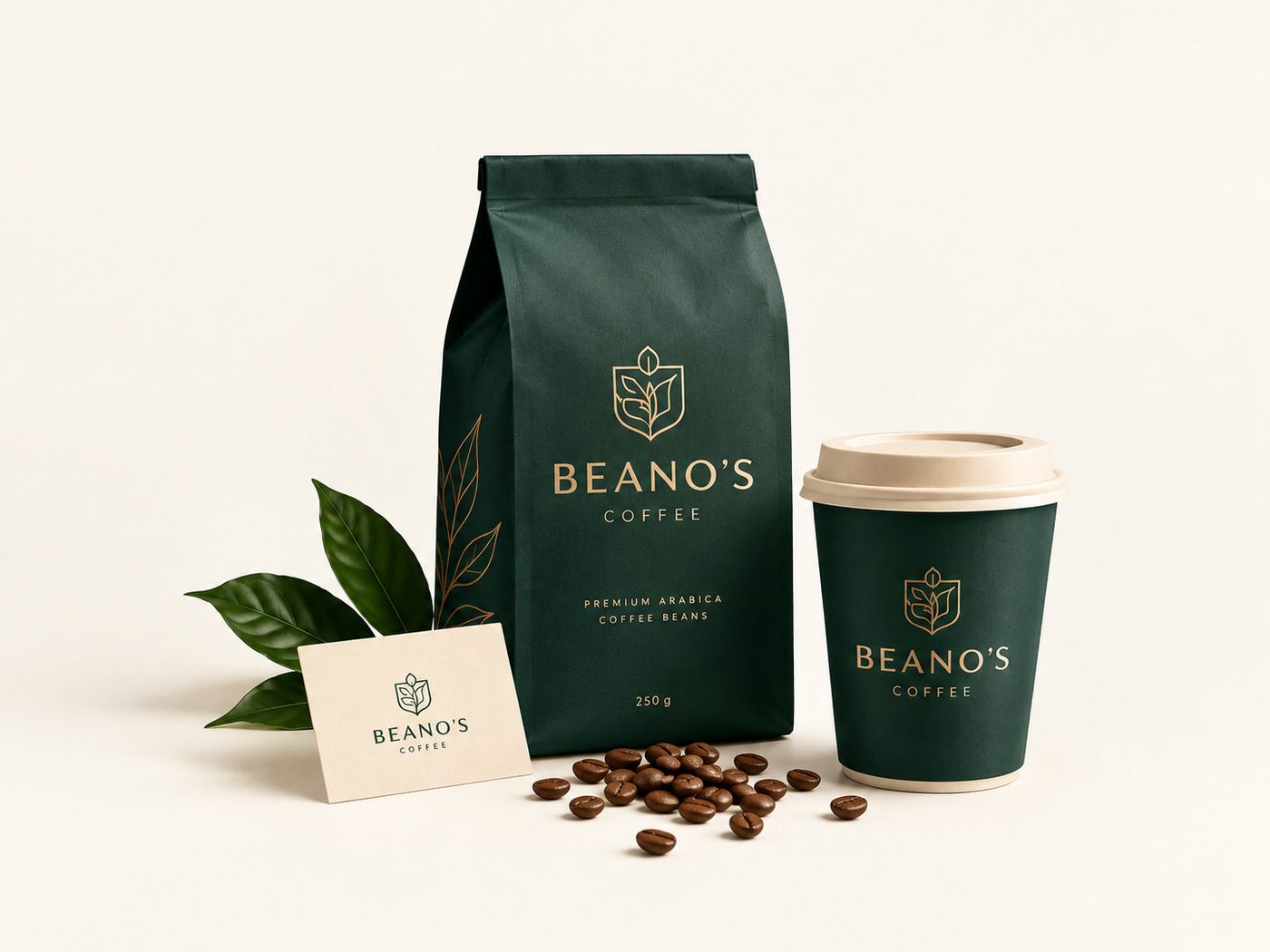
In practical terms, it gives your business a recognisable and consistent way to present itself wherever customers encounter it.
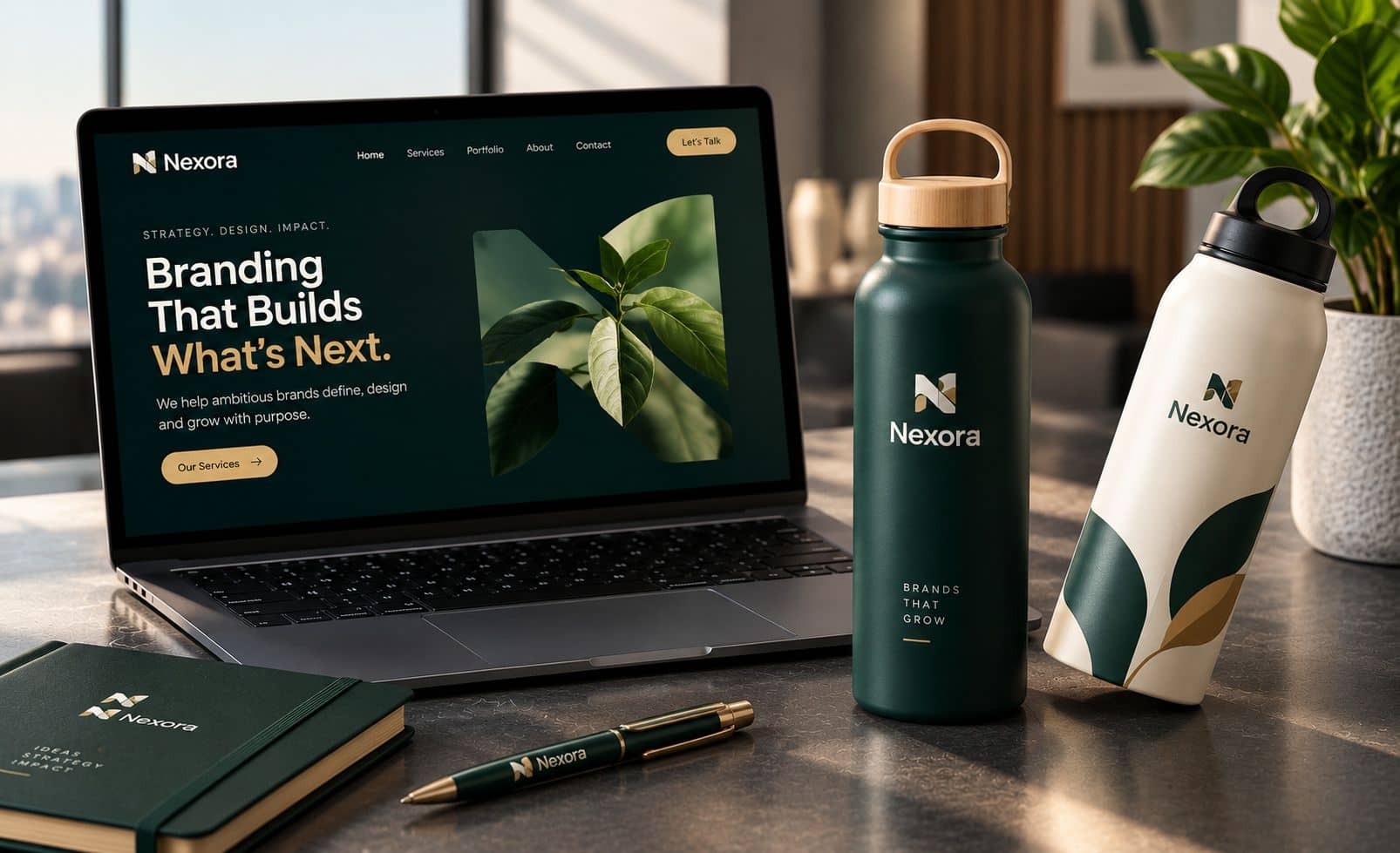
Brand identity includes the logo, but it also extends to the visual elements and rules that make your communications feel connected.
A brand identity project can include:
- Logo system: Primary logo, secondary variations, symbols and appropriate responsive versions.
- Colour palette: Defined brand colours and their approved combinations.
- Typography: Selected typefaces and rules for headings, body copy and other text.
- Graphic elements: Supporting shapes, patterns, icons and other distinctive visual assets.
- Imagery direction: Guidelines for photography, illustrations and image treatments.
- Layout principles: Rules that help create a recognisable visual hierarchy across materials.
- Brand guidelines: Documentation explaining how the elements work together and how to apply them consistently.
Depending on the project's scope, a broader brand identity engagement may also address messaging, tone of voice and the strategic positioning behind the design.
Adobe's guide to brand identity explores how visual elements, brand personality, messaging and customer experiences contribute to a cohesive identity.
The important point is that brand identity is not simply a collection of attractive assets. It is a system designed to make your business recognisable and consistent.
Brand Identity vs Logo: The Key Differences
Although the two are closely connected, they serve different purposes.
Logo Design
Primary purpose: Identify your business.
- Scope: A visual identifier, such as a wordmark, symbol or combination mark.
- Colour: Colours applied to the logo itself.
- Typography: Lettering used within the logo, where applicable.
- Applications: Logo files for agreed uses, such as websites, social media and print.
- Guidelines: Basic instructions for using the logo may be included.
- Best suited for: Businesses that need a logo or already have an established visual identity.
Brand Identity Design
Primary purpose: Create a consistent, distinctive presentation for your business.
- Scope: A coordinated system of visual elements.
- Colour: A defined palette for different brand applications.
- Typography: Selected typefaces and rules for headings, body text and other content.
- Applications: May include social media templates, stationery, presentations and other branded materials, depending on the project scope.
- Guidelines: Rules explaining how the visual elements work together and should be applied.
- Best suited for: Businesses that need a coherent identity across multiple customer touchpoints.
The Bottom Line
A logo is one component of a brand identity, not a substitute for the entire system. Logo design focuses on recognition, while brand identity design establishes how your business presents itself consistently.
One important distinction: a logo-only project can still involve research and strategy, while a brand identity project does not automatically include a complete business strategy or every marketing asset. Always confirm the scope and deliverables before commissioning either service.
Why a Great Logo Can Still Leave Your Brand Looking Inconsistent
Imagine a growing consultancy with an attractive logo. Its social media posts use different fonts every week. Its company profile has a completely different visual style from its website. Its proposals use inconsistent colours, and every new designer interprets the brand differently.
The logo itself may be perfectly fine. The problem is that there is no consistent system guiding the rest of the communication.
Now imagine the same consultancy with a defined colour palette, typography hierarchy, layout principles, imagery direction and reusable document templates. Its website, proposals, social media and presentations feel like they come from the same business.
That consistency helps customers recognise the company and understand the impression it intends to communicate.
This is one reason visual identity matters beyond aesthetics. It supports recognition, differentiation and a more coherent customer experience. Adobe's visual identity design guide explains how coordinated visual elements and guidelines help businesses maintain consistency across their communications.
For a business selling professional services, the implications can be significant. A company competing for institutional contracts or premium clients needs its presentation to reinforce the quality of its actual work.
The goal is not to make the business look expensive for the sake of it. The goal is to ensure its presentation supports the value it promises.
Which Does Your Business Need: A Logo or a Full Brand Identity?
The right choice depends on your stage of growth, current assets and immediate business objectives.
1. Choose logo design if you need a specific visual identifier
A logo-only project may be appropriate if you are testing a small business idea, launching a limited product or replacing an outdated logo while keeping an otherwise consistent identity.
It can also make sense when your business already has documented brand guidelines and simply needs a new logo asset.
Before commissioning the work, clarify the deliverables. Ask whether you will receive alternative logo versions, editable or vector files, monochrome variations and usage instructions.
2. Choose brand identity design if your business is growing
A broader identity system is often more useful when your business is entering a new market, attracting larger clients, expanding its team or producing more marketing materials.
You may need one if:
- Your website, proposals and social media look unrelated.
- Different team members create materials using different fonts and colours.
- Your business has grown, but its visual presentation still feels like an early-stage venture.
- You struggle to communicate a consistent level of quality across customer touchpoints.
- You are preparing to launch new services, products or locations.
In these situations, another logo redesign may not solve the underlying problem. The business may need a clearer position and a coordinated visual system.
Explore our approach to brand identity design if you want to understand what a broader identity engagement can involve.
3. Consider brand strategy before either project if your direction is unclear
There is another important consideration: design cannot resolve every branding problem.
If you cannot clearly explain who your ideal customers are, what differentiates your business or why customers should choose you over alternatives, jumping straight into visual design may be premature.
Brand strategy helps establish those foundations. It informs the positioning, audience priorities and business objectives that visual decisions should support.
Our guide to the brand identity design process explains how research and positioning can inform the development of a coherent identity.
Does Brand Identity Design Cost More Than Logo Design?
Generally, a comprehensive brand identity project requires a larger investment because it involves more deliverables, decisions and applications than a logo-only engagement.
However, there is no universal price difference. Costs depend on the complexity of the business, the research required, the number of deliverables, the level of strategic input and the scope of implementation.
A useful way to compare proposals is to look beyond the headline price.
Ask these questions:
- Is the project limited to a logo, or does it include a complete visual identity system?
- Is research or brand positioning included?
- How many logo variations and supporting assets will be delivered?
- Are brand guidelines included?
- Will you receive templates or applied materials such as stationery and presentation layouts?
- What file formats, usage rights and revision rounds are covered?
Two proposals described as “branding packages” can offer very different outcomes. Comparing the deliverables makes it easier to understand what you are paying for.
For more context on budgeting, read our guide to how much branding costs in Kenya.
Why Brand Guidelines Matter
Creating a visual identity is only part of the work. The identity must also be applied correctly.
Without clear guidelines, someone may change the logo's proportions, introduce unapproved colours, combine unsuitable typefaces or create layouts that conflict with the brand's intended character.
Brand guidelines provide practical direction for using the identity. They help employees, marketing teams, designers and other suppliers work from the same visual standards.
For growing businesses, this becomes increasingly important as more people contribute to communications.
The World Intellectual Property Organization also highlights the relationship between brand assets, ownership and guidelines in its article on building a strong brand identity protected by intellectual property. Beyond design consistency, businesses should clarify ownership and usage rights for commissioned brand assets and investigate relevant trademark protection where appropriate.
A useful identity system should not simply look good in a presentation. It should be practical enough to use across everyday business activities.
Build a Brand That Works Beyond the Logo
Your logo is important, but it cannot carry your entire brand on its own.
As your business grows, customers encounter you through proposals, websites, presentations, social media, packaging and conversations with your team. Each interaction contributes to their understanding of your business.
A coherent identity helps those touchpoints work together. It gives your business a consistent visual language and helps ensure that the quality of your presentation supports the value of your offering.
At Brand Veneer Studio, we approach identity as a business tool, not decoration. We connect visual decisions to positioning, audience expectations and the impression a business needs to create.
If your business has outgrown its current presentation, explore our visual identity services or schedule a conversation to discuss what your business actually needs.
The objective is not simply to have a better-looking logo. It is to build an identity that helps the right customers recognise, understand and take your business seriously.
Frequently Asked Questions
Yes. A logo is one component of a visual identity system, which in turn forms part of the broader brand identity. The logo provides recognition, while the wider system establishes how the business presents itself consistently.
Yes. A logo can be well designed and effective at identifying a business even when the business has no complete identity system. However, without coordinated visual rules, other communications may look inconsistent.
Not necessarily. Some brand identity engagements include strategic research and positioning, while others focus primarily on visual design. Confirm the scope with your designer before committing.
If your logo is the main problem and the rest of your materials are consistent, a logo redesign may be enough. If your business looks different across its website, proposals, social media and other touchpoints, a broader identity project may be the better investment.
No. The term can encompass the wider elements through which a business expresses itself, including messaging, personality and tone of voice. Visual identity refers specifically to the visual components, such as logos, colours, typography and imagery.