
Signs Your Brand Needs a Refresh, Not a Rebuild
Your brand may not need a complete overhaul. Here are the signs that a focused refresh can restore relevance, consistency, and credibility without starting from scratch.
The Fear That Stops Businesses From Fixing an Obvious Problem
Most business owners know, quietly, that their brand looks dated. They also assume fixing it means an expensive, disruptive full rebuild — new name, new positioning, months of upheaval — so they put it off indefinitely.
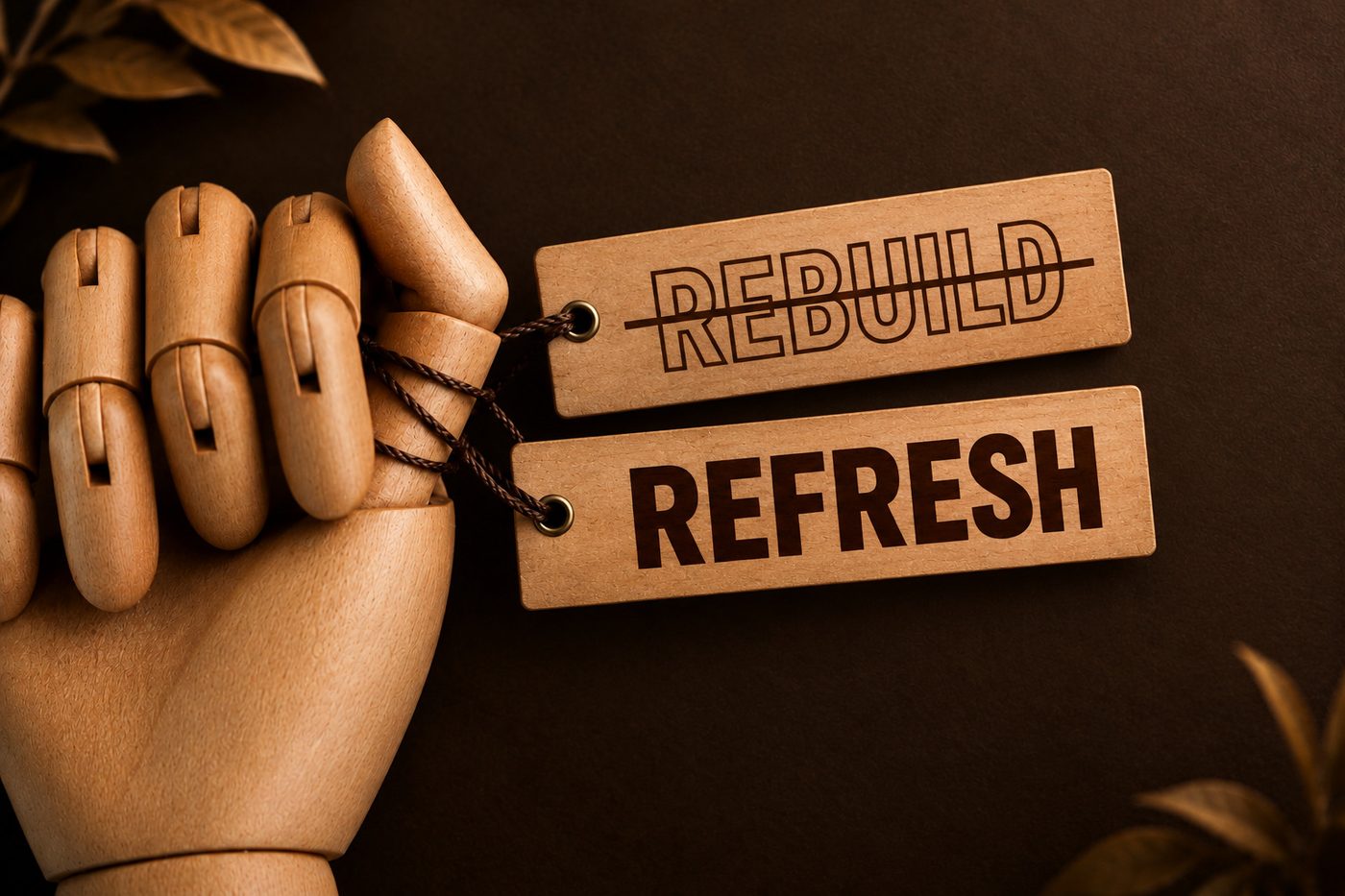
That assumption is usually wrong. Most dated brands don't need to be rebuilt. They need to be refreshed. Knowing which one you actually need is the difference between a manageable few-week project and an unnecessary overreaction that risks confusing the customers who already trust you.
Refresh vs Rebuild: The Core Distinction
A refresh updates how an already-sound brand looks and feels — modernizing the logo, tightening the colour palette, improving typography and consistency — without touching what the business fundamentally stands for or is called.
A rebuild (a full rebrand) changes the underlying strategy: positioning, sometimes the name, sometimes the target audience — because the business itself has meaningfully changed, or the current brand actively misrepresents it.
Getting this diagnosis right first is the single biggest cost-saver in the entire process. We cover the rebuild side of this in depth in our rebrand framework for established businesses — this piece focuses on how to know if you don't actually need to go that far.
Signs You Need a Refresh, Not a Rebuild
1. Customers still understand what you do and why you're different
If the confusion is purely visual — "your logo looks old" — and not strategic — "I don't understand what makes you different from your competitors" — that's a refresh signal.
2. The visual system just feels dated, not wrong
Old-style gradients, a dense or dated typeface, inconsistent application across materials. The bones are fine; the surface needs modernizing.
3. Internally, there's no real disagreement about who you are
If you asked five people on your team to describe the company in one sentence, they'd broadly agree. The problem is presentation, not identity.
4. You're embarrassed by how your materials look next to newer competitors
This is one of the clearest and most common refresh triggers — a business that's actually more established and more capable than a flashier newer competitor, but whose visual materials don't reflect that.
5. Your business hasn't fundamentally changed
Same core offering, same target customer, same value proposition as when the current brand was built — just aged out visually.
Signs You Actually Need a Full Rebuild
1. The business itself has changed
New markets, new products, a merger, or a pivot that the current brand doesn't describe anymore.
2. Perception and reality have drifted apart
You're premium now, but your brand still reads budget — or the reverse. No amount of visual polish fixes a positioning mismatch.
3. Your team can't agree on what you stand for
If five people in your business would describe "who we are" five different ways, that's a strategy gap a visual refresh can't close.
4. You're constantly explaining away your own brand
"We know it looks like we only do X, but we actually also do Y" is a sentence that signals the brand itself, not just its appearance, needs to change.
A Simple Self-Diagnostic
Ask these three questions honestly:
- Do customers understand what we do and why we're different? (No → lean rebuild)
- Has our business meaningfully changed since our current brand was built? (Yes → lean rebuild)
- Is the only real complaint "it looks old"? (Yes, and answers above are otherwise fine → lean refresh)
If you're still unsure after answering these, that uncertainty is itself a useful signal — it usually means a short brand audit conversation is worth having before committing budget either way.
Why This Distinction Matters for Your Budget
A visual refresh is typically a fraction of the cost and timeline of a full strategic rebrand — see our Kenya branding pricing guide for current ranges across both. Businesses that skip the diagnosis step often either overspend on a full rebuild they didn't need, or underspend on a rebuild they actually did need disguised as "just update the logo." Getting the diagnosis right first prevents both mistakes.
Not sure which one your business actually needs? Book a free Brand Audit call and we'll give you an honest read before you spend on either.
Frequently Asked Questions
You can, but even a refresh benefits from an outside, objective read on whether the underlying strategy is actually sound — it's easy to misdiagnose your own brand when you're too close to it.
There's no fixed timeline, but every 5–8 years is a reasonable checkpoint for a light audit, even if nothing looks obviously broken yet.
Rarely, if it's done well — a refresh, by definition, keeps the strategic core recognizable. The risk of customer confusion is much higher with a full rebuild, which is exactly why the change-management guidance in our rebrand framework matters more there than here.