
Premium Branding in Kenya: A Guide to Standing Out
Premium branding in Kenya is about more than an attractive logo. Learn how strategic positioning, visual identity, and brand consistency help growing businesses build trust and compete for better clients.
In a competitive market, offering a good product or service is not always enough. Customers also judge how a business presents itself, communicates its value and earns their trust. This is where premium branding in Kenya becomes a strategic advantage for businesses looking to attract better clients and grow beyond price-driven competition.
From professional services and real estate to manufacturing, hospitality and technology, businesses compete for the attention of customers who have more choices than ever. When several companies offer similar solutions, the brand that communicates its value most clearly can have an advantage before the first sales conversation even begins.
Premium branding is not about making a business look expensive. It is about creating a credible, distinctive and consistent brand that reflects the quality of the business and gives customers a compelling reason to choose it.
What Is Premium Branding?
Premium branding is a strategic approach to building a brand that communicates quality, credibility, distinction and value. It combines market positioning, customer understanding, messaging and visual identity to shape how people perceive a business.
Unlike a design exercise focused solely on a logo, premium branding considers the entire experience a customer has with a company. That includes its website, proposals, social media presence, packaging, presentations and customer communications.
For example, a consulting firm may have excellent expertise but struggle to win high-value contracts because its company profile looks generic, its website communicates little differentiation and its messaging focuses mainly on being affordable.
The problem may not be the quality of its services. The problem may be the gap between the value it delivers and the value its brand communicates.
A well-positioned brand helps close that gap.
Why Premium Branding Matters for Kenyan Businesses
1. It helps you compete beyond price
Price competition is difficult to escape when customers struggle to distinguish one provider from another. If every competitor makes similar promises and presents a similar identity, price becomes an easy way to compare options.
Premium branding gives your business an opportunity to communicate what makes it different, who it serves best and why its approach deserves consideration.
That difference might be specialised expertise, dependable delivery, a superior customer experience or a deeper understanding of a particular market.
The objective is not simply to charge more. It is to make your value easier to understand and justify.
2. It builds confidence before the first meeting
Customers often encounter a business through a Google search, a referral, a company profile or a social media page before speaking to anyone.
These initial interactions influence whether they consider the business credible enough to contact.
A polished and consistent brand helps communicate professionalism. Clear messaging, readable layouts, quality imagery and a well-organised website make it easier for potential clients to understand what you offer.
Branding cannot replace strong delivery or a good reputation, but it can help ensure that your presentation does not undermine them.
3. It helps your business stand out in crowded markets
Many businesses rely on familiar industry conventions when designing their brands. While these conventions can make a company recognisable within its category, copying them too closely can make the business difficult to distinguish from competitors.
Effective premium branding identifies which category signals customers need to recognise and where the business can create a distinctive position.
A financial consultancy, for instance, might communicate authority through precise typography, restrained colour, clear data presentation and confident messaging rather than relying on the same generic corporate visuals used by every competitor.
Distinctiveness should make the business easier to recognise and understand, not merely different for the sake of being different.
4. It creates consistency as the business grows
As a company expands, its brand appears across more channels and is handled by more people. Without a defined identity system, its website, proposals, social media graphics and sales materials can begin to look unrelated.
A documented brand identity provides rules for using the logo, colours, typography, imagery and layouts. It helps employees and external partners communicate a recognisable brand without reinventing its appearance every time a new asset is created.
This consistency is particularly valuable for growing Kenyan businesses preparing for larger contracts, new locations or regional expansion.
The Four Foundations of Premium Branding in Kenya
Premium brands are not built through visual design alone. Four interconnected elements create the foundation.
1. Strategic positioning
Positioning defines the place your business wants to occupy in the minds of its target customers.
Before designing anything, establish:
- Who are your most valuable customers?
- What problem do you solve particularly well?
- What makes your approach different from competing alternatives?
- What should customers understand about your business immediately?
- Why should they choose you instead of another provider?
These answers guide the brand's messaging, identity and overall customer experience.
A business that tries to appeal to everyone may struggle to communicate a compelling reason for anyone to choose it. A clear position makes marketing more focused and design decisions more purposeful.
2. A distinctive visual identity
Visual identity is the system of visual elements used to represent a business. It typically includes the logo, colour palette, typography, imagery, graphic elements and layout principles.
In premium branding, these elements must work together to express the brand's positioning.
Colour should support recognition and communicate an appropriate impression. Typography should reflect the brand's personality while remaining readable. Layouts should guide attention towards important information instead of overwhelming the audience.
Whitespace, in particular, can improve clarity by separating ideas and giving important elements room to stand out. It should serve a communication purpose rather than simply make a design look minimal.
The best identity is not necessarily the most elaborate. It is the one that communicates the right message to the right audience and remains effective across the places customers encounter the business.
3. Clear and confident messaging
A premium-looking brand can still struggle if its messaging is vague.
Statements such as "we offer quality services" or "we are committed to excellence" communicate little because almost every competitor can make the same claims.
Strong brand messaging explains what the business does, whom it serves and what meaningful difference it offers.
For example, instead of saying, "We provide professional business consulting," a firm could explain the specific business problems it helps clients solve and the expertise it brings to those challenges.
The aim is to replace generic promises with relevant, credible and specific communication.
4. A consistent customer experience
Brand perception is shaped by more than visual identity. Customers also notice how quickly enquiries are answered, how proposals are presented, whether commitments are honoured and how problems are resolved.
If a website promises exceptional service but the actual experience is disorganised, the brand loses credibility.
Premium positioning therefore requires alignment between what a business promises and what it consistently delivers.
The identity attracts attention. The experience determines whether that initial confidence is reinforced.
How to Build a Premium Brand for Your Business
A practical branding process should connect business objectives to the final visual identity.
Step 1: Audit your existing brand
Review your website, social media profiles, company profile, sales presentations and other customer-facing materials.
Look for inconsistencies, outdated visuals, unclear messaging and gaps between the quality of your services and how the business presents itself.
Also consider how customers currently describe your business and how competitors position themselves.
The purpose of the audit is to identify what needs to change before investing in a redesign.
Step 2: Define your target audience and market position
Determine which customers you want to attract and what matters most to them when choosing a provider.
For a business targeting corporate clients, credibility, reliability and evidence of expertise may be particularly important. A consumer brand may need to place greater emphasis on product experience, emotional appeal or convenience.
Your positioning should reflect real customer needs and genuine business strengths, not simply the image you want to project.
Step 3: Develop your brand identity system
Translate the positioning into a coherent visual language.
This includes developing an appropriate logo, selecting colours and typography, establishing imagery principles and defining how key materials should look.
The identity should work across digital and physical applications, from a mobile screen to a printed company profile or a formal business proposal.
Step 4: Align your website and marketing materials
Your website, social media pages and sales documents should tell the same brand story.
Review whether visitors can quickly understand your services, recognise your expertise and identify the next step they should take.
A professional website should support the brand's positioning with clear information architecture, useful content, readable typography and straightforward navigation.
For additional guidance on discoverability, consult Google's SEO Starter Guide, which explains how to create content and organise websites so search engines and users can understand them.
Step 5: Implement consistent brand guidelines
Document how the identity should be used, including logo variations, colours, typography, spacing, imagery and common applications.
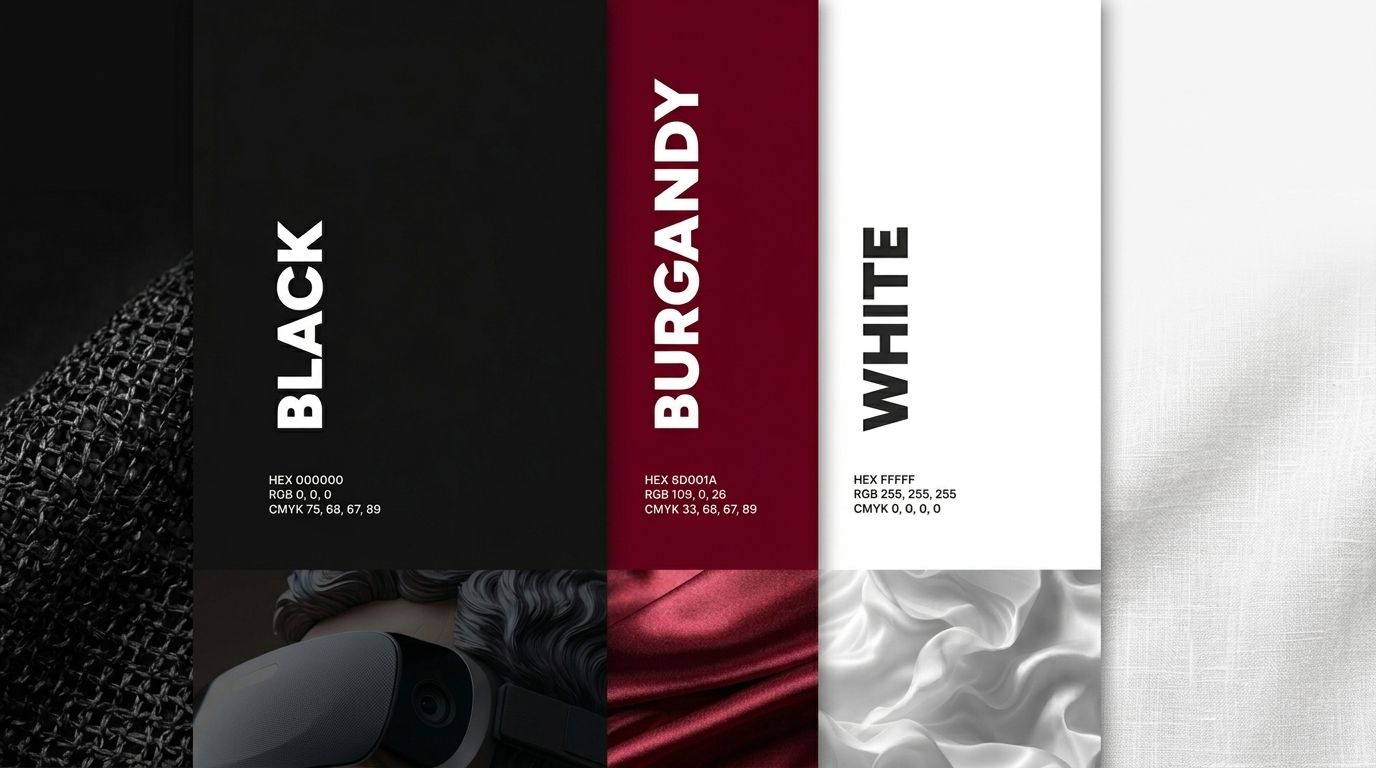
Give the relevant team mbers access to the correct files and templates. Establish a process for reviewing new materials before publication.
Consistency should become part of how the business operates rather than an occasional design correction.
Step 6: Measure whether the brand is working
Branding should support measurable business objectives.
Depending on your starting point, useful indicators may include:
- The quality and suitability of incoming enquiries.
- Conversion rates from qualified leads to paying customers.
- The proportion of proposals progressing to the next stage.
- Customer recognition and feedback.
- Repeat business and referrals.
- The consistency of brand pr
- esentation across customer touchpoints.
Establish a baseline before making major changes and review performance over time. These indicators help you understand whether the new positioning and identity are supporting business goals, although results will also depend on p
ricing, sales execution, service quality and market conditions.
How Much Does Premium Branding Cost in Kenya?
The cost of premium branding in Kenya depends on the scope of the project, the complexity of the business and the strategic work required.
A basic logo project is different from a complete brand identity system. A comprehensive branding engagement may involve research, competitor analysis, positioning, messaging, visual identity, brand guidelines and the design of essential business materials.
The right investment depends on what the business needs to solve.
A new business may need a distinctive identity and a clear foundation for communicating with customers. An established company may require a broader repositioning because its existing brand no longer reflects its capabilities, target market or ambitions.
Rather than choosing a branding provider based on price alone, compare the process, deliverables, strategic thinking and practical support included in the engagement.
Our guide to how much branding costs in Kenya explains the main pricing considerations and the differences between basic logo design and a more comprehensive identity system.
Common Premium Branding Mistakes to Avoid
Designing before defining the strategy
A visually attractive identity can still fail to differentiate the business if it is not grounded in a clear market position.
Define the audience, value proposition and desired perception before developing the visual system.
Confusing minimalism with premium quality
Minimal design can communicate confidence and sophistication, but minimalism alone does not make a brand premium.
The identity must be appropriate for the audience, industry and positioning. A design that removes too much information may make the business harder to understand rather than more desirable.
Copying competitors
Using the same colours, layouts, messaging and imagery as competitors may make your business appear interchangeable.
Study competitors to understand category expectations and identify opportunities to communicate your strengths more clearly.
Ignoring everyday brand touchpoints
A sophisticated logo cannot compensate for an outdated website, inconsistent proposals or poorly presented sales materials.
Prioritise the touchpoints that influence customer decisions and ensure they reinforce the same brand promise.
Expecting design to fix a weak offer
Branding can communicate value, improve recognition and help customers understand what makes a business different. It cannot manufacture expertise, guarantee sales or compensate indefinitely for poor service.
The strongest results come when a credible offer, clear positioning, effective design and dependable delivery reinforce one another.
Is Premium Branding Right for Your Business?
Premium branding may be particularly valuable if your business has outgrown its original identity, struggles to differentiate itself from competitors or wants to appeal to a more demanding customer segment.
It can also help established businesses prepare for expansion, strengthen their corporate presentation or align their brand with the quality of their current services.
However, a complete rebrand is not always necessary. Sometimes, clearer messaging, more consistent design or a targeted visual refresh will address the underlying problem. Our guide to rebranding an established business explains how to distinguish between a refresh and a more fundamental strategic change.
The important step is to diagnose the problem before deciding on the solution.
Build a Brand That Reflects Your Business's Value
Premium branding in Kenya is not about appearing bigger than you are. It is about communicating your real value with clarity, distinction and consistency.
When positioning, messaging, visual identity and customer experience work together, customers have a clearer reason to understand your business, trust its promise and consider its services.
For ambitious businesses, the objective is not simply to look better than competitors. It is to build a brand that supports the quality of the offer, strengthens market perception and makes the business easier to choose for the right reasons.
At Brand Veneer Studio, we approach branding as a business decision, not a decoration exercise. We begin with your story, your market and your ambitions, then translate that understanding into a coherent brand identity.
If your business is ready to move beyond generic presentation and build a more distinctive market position, explore our brand identity services or visit Brand Veneer Studio to start a conversation.
Frequently Asked Questions
Premium branding is a strategic approach to positioning and presenting a business so that its quality, distinction and value are clear to its intended audience. It combines positioning, messaging, visual identity and customer experience.
Premium branding can help a business communicate its value, differentiate itself from competitors, strengthen credibility and attract more suitable customers. Its commercial impact depends on the strength of the offer, execution and market conditions.
No. Growing businesses, SMEs, startups and professional service firms can all benefit from strategic branding. The appropriate scope depends on the business's stage, objectives and available resources.
A logo is one visual identifier. A brand identity is the broader system that includes the logo, typography, colours, imagery and design rules used to create a consistent brand experience.
The timeline depends on the scope, research requirements, stakeholder involvement and number of deliverables. A focused identity project generally takes less time than a comprehensive strategic rebrand. A realistic schedule should be agreed upon before work begins.
Look for a studio that understands your business objectives, asks meaningful questions about your customers and competitors, explains its strategic process and delivers a usable identity system. Review relevant portfolio projects and ensure the proposed scope addresses your actual business needs.
It can help communicate the value that supports stronger pricing, but it does not guarantee that customers will accept higher prices. Pricing power also depends on the quality of the offer, customer demand, competitive alternatives, reputation and the experience delivered.