
Brand Identity vs Logo: What's Actually Different (And Why the Difference Costs You Money)
A logo is a mark. A brand identity is a whole system — and confusing the two is the most expensive mistake growing businesses make.,Here's exactly where the line sits, and how to tell which one you actually need.
Brand Veneer Studio · August 5, 2026 · 5 min read · Updated August 6, 2026
"I Just Need a Logo" Is the Most Expensive Sentence in Branding
It's the most common opening line in a first consultation call, and it's almost always wrong — not because the person is mistaken about wanting a mark, but because they're underestimating what actually makes a business look credible, consistent, and worth a premium price.
A logo and a brand identity are not the same thing, and treating them as interchangeable is the single most common — and most expensive — misunderstanding growing businesses have about design.
What a Logo Actually Is
A logo is one visual asset: a mark, a wordmark, or a combination of the two. It's designed to be recognizable at a glance, scalable from a business card to a billboard, and distinct from competitors. That's its entire job.
A logo, on its own, doesn't tell your team what colors to use in a presentation, what tone your Instagram captions should have, how your packaging should look on a shelf next to five competitors, or what typography belongs on an invoice. It's a single note, not the song.
What a Brand Identity Actually Includes
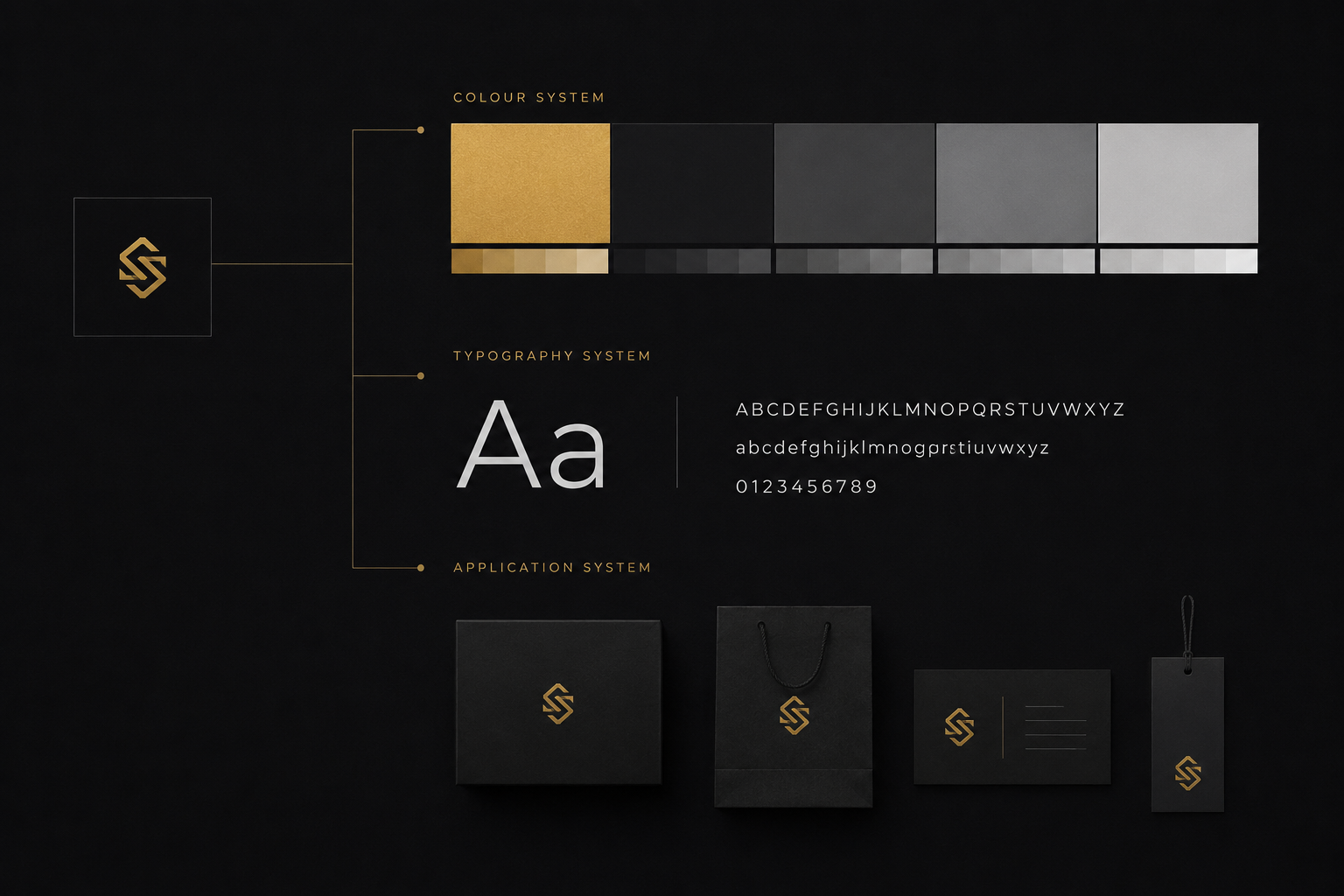
A brand identity is the full system the logo lives inside. At minimum, it typically includes:
- The logo and its approved variations (full mark, icon-only, horizontal, stacked)
- A defined color palette — primary, secondary, and usage rules (not just "our colors are blue and gold," but exactly which shades, in which proportions, in which contexts)
- Typography — which fonts, in which weights, for headlines versus body copy
- A documented style guide that tells anyone — a new employee, an outside agency, a printer — exactly how to use all of the above correctly
- Applied examples — how the identity looks on real touchpoints: business cards, social templates, packaging, signage, a website header
The logo is one component inside this system. The system is what actually makes a business look consistent — and consistency, more than any single design choice, is what builds the kind of recognition and trust that lets a business charge what it's worth.
Why the Confusion Costs You Money
Businesses that buy "just a logo" and stop there tend to end up with a recognizable mark surrounded by visual chaos everywhere else — a WhatsApp profile picture in one shade of blue, a Facebook cover photo in a slightly different shade, an invoice in a totally unrelated font, a shop sign that doesn't match the website at all.
Individually, none of these feels like a big deal. Collectively, they quietly tell a customer that the business is inconsistent — and inconsistency reads as risk. It's the same underlying psychology behind why disciplined, consistent visual systems build trust faster than any single "nice" design choice; we go deeper on that mechanism in The Architecture of Trust.
The fix isn't necessarily an expensive full rebrand. It's simply understanding, before you commission anything, whether your business needs a single asset or a documented system — because the second one is what actually gets used consistently across every place a customer encounters you.
How to Tell Which One You Need
You probably need just a logo if:
- You're validating a very early idea and need something usable now, cheaply.
- You already have a documented brand system and are only refreshing the mark itself.
You need a full brand identity if:
- More than one person will need to produce brand materials — a team, freelancers, an ad agency — and consistency matters.
- You're operating across multiple touchpoints: physical location, website, social media, packaging, print.
- You're an established business whose current visual materials already look inconsistent or dated. If that's you, it's worth reading our related piece on signs your brand needs a refresh, not a rebuild before commissioning anything.
What to Ask a Studio Before You Commission "Just a Logo"
- "Will this come with documented usage guidelines, or just the logo files?"
- "What happens when I need this on packaging, a sign, or a presentation template later — is that included, or a separate project?"
- "If two different people in my business use this brand today, will it look consistent?"
If the honest answer to any of these is no, you're buying a logo, not a brand — which might be exactly right for where your business is today. Just make the decision knowingly, not by accident.
FAQ
Is a brand identity always more expensive than a logo? Yes, because it's a larger scope of work — but the cost difference is usually smaller than business owners expect, and it prevents a much larger cost later: paying to fix inconsistent materials once the business has grown. For current Kenyan pricing across both tiers, see our branding cost guide.
Can I add a full brand identity later if I start with just a logo? Yes, and it's a common, sensible path for early-stage businesses — just be aware that the logo may need minor adjustment to work properly within a full system built around it later.
Does a small business really need a documented style guide? If only one person will ever touch your brand materials, arguably not. The moment a second person — an employee, a freelancer, an agency — is involved, a style guide stops being a nice-to-have and starts preventing real inconsistency.
Not sure whether your business needs a logo refresh or a full identity system? Book a free Brand Clarity Call and we'll tell you honestly which one fits. Want to see the difference in practice? Browse our work, read more about Brand Veneer Studio, or get in touch.
(If any of the links above aren't live yet, start here and we'll point you the right way.)